ReferMe
University of Kansas ThesisIn a culture where technology is widely available, psychotherapeutic services should provide better, easier ways for users to find appropriate in-person psychotherapeutic services. There are many websites and apps available to help people find online therapy, but comparatively few offer in-person therapy. The few platforms that do aid in finding in-person therapy sessions are poorly designed, cold, and unduly complicated. Many of those platforms also serve up far too many irrelevant options after completing both the survey and filtering. This experience can be overwhelming. Options that would be a good fit for the user are often buried deep in a long list, and the user may not be able to discern their best match.
Thesis Objective
To design a service platform that gives users the confidence to find an in-person psychotherapist using their mobile phone, tablet, or computer. The platform should offer a search experience that narrows the pool of options into a discrete, manageable list and guides the user’s journey with easy, step-by-step directions and guidance. Through a process of research, discovery, and analysis, this author will recommend an improved platform design for finding the psychological help they need.
Research Questions
How does a service-finding platform filter and present information in a way that makes the user feel like the list is specifically created for them?
When there are many options, what questions need to be asked in order for the final items to be narrowed and specific to the user?
How many psychotherapists should be presented to the user in order for them to feel like they have a good but not overwhelming selection?
How does a site make the user feel comfortable and build the user’s trust?
Understanding the Problem
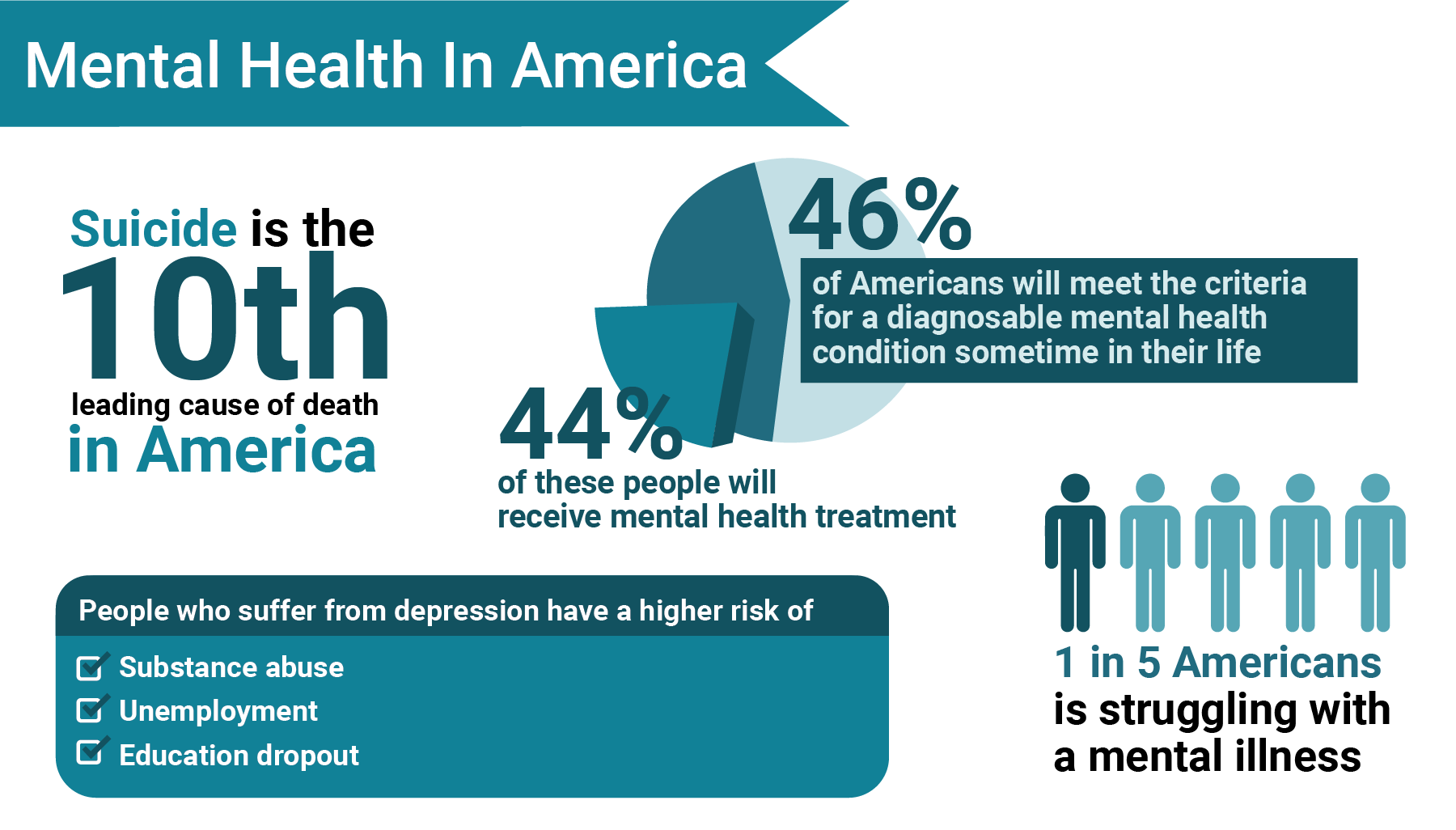

According to National Alliance on Mental illness, suicide has become the 10th leading cause of death in America, with 1 in 5 Americans struggling with a mental illness. Even though suicide is the most extreme outcome, it is not the only negative outcome from mental illness. People who suffer from depression have a higher risk of developing cardiovascular disease, experience substance abuse, are more likely to be unemployed, and have a higher education dropout rate compared to peers. (National Alliance on Mental Illness, 2020)
According to Mental Health America, 46% of Americans will meet the criteria for a diagnosable mental health condition sometime in their life, and half of those people will develop conditions by the age of 14. This statistic implies that almost half of people would need to see a psychotherapist at some time in their life, but only 44% of people with mental illness receive mental health treatment. (National Alliance on Mental Illness, 2020) There are many reasons why Americans are not receiving the help they need. Acknowledging one needs help, the stigma behind mental health, financial constraints, and making time in a busy life for appointments are all obstacles in receiving the help one needs. (Wagner, 1994) There is nothing worse than finally finding a psychotherapist, making an appointment, and then leaving the appointment feeling like it was a waste of time or feeling like nothing was gained from the experience.
Many who finally attend therapy but do not get the sense of fulfillment start to question if seeking help is truly worth their money and time. According to a research study at Brigham Young University, 20 to 57% of people do not return after their first initial therapy session. (Lambert & Barley, 2001) There are many reasons someone might not return to therapy, but a personal connection with the patient and professional is a large factor.