Patient Profile
Oracle Health, 2025
Patient Profile was built without UX involvement and surfaced to upper management after implementation, at which point it was escalated to the User Experience team as a top priority.
While on the Patient Administration System team, I was asked to lead the redesign of Oracle Health’s Patient Profile.
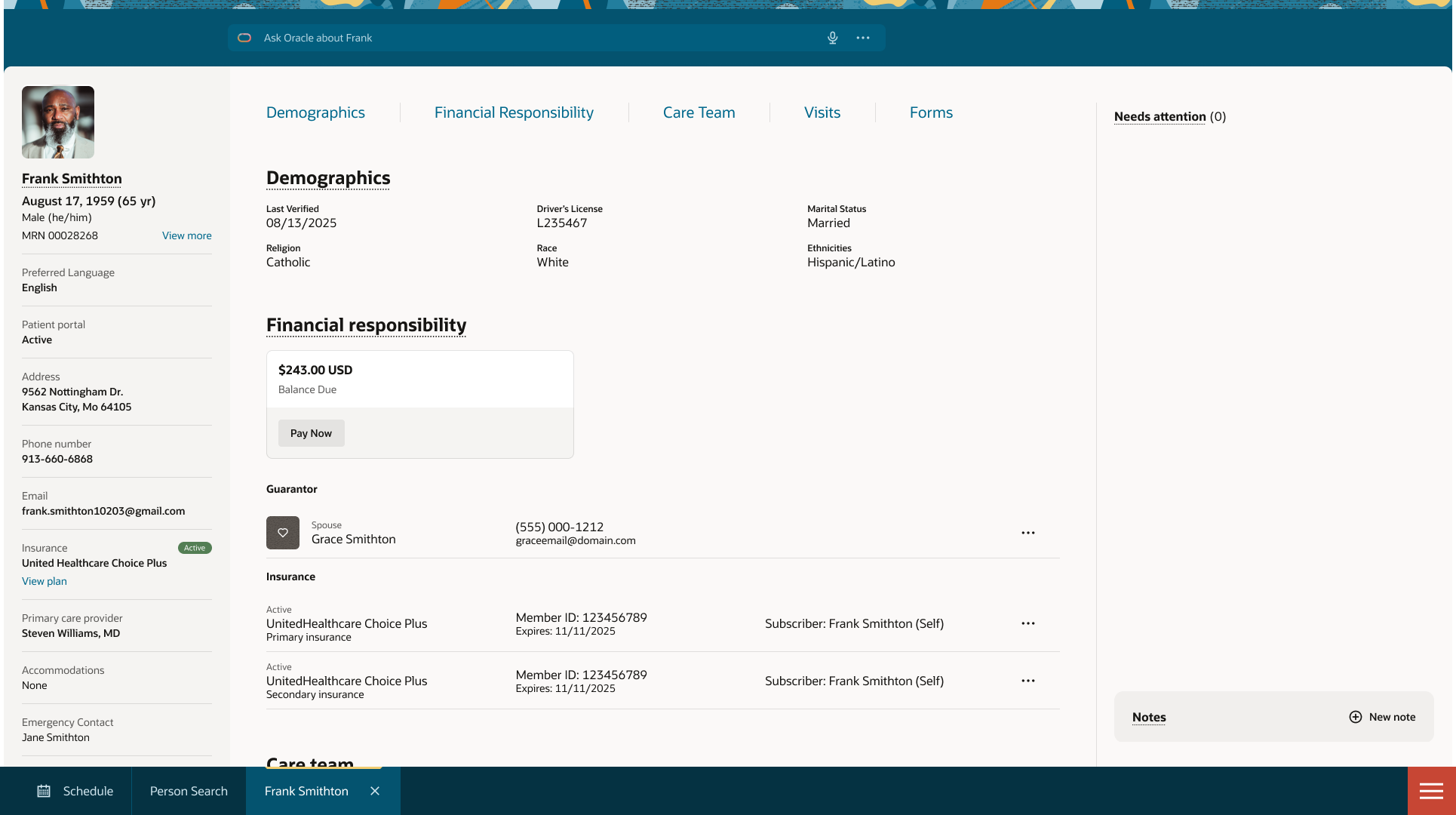
The Challenge
Multiple development teams across different business groups were independently working on similar solutions, resulting in duplicated effort and inconsistent user experiences.
To address this, I identified the various teams involved, along with their respective users and goals. I facilitated cross-functional discussions to align on workflows, uncover shared requirements, and incorporate key use cases from each group. This collaborative approach enabled the organization to build a single, scalable solution that met the needs of all stakeholders while reducing redundant development efforts.
Multiple teams were independently solving the same problem. We aligned product requirements and user needs to create a single, scalable solution that could support multiple teams and use cases.
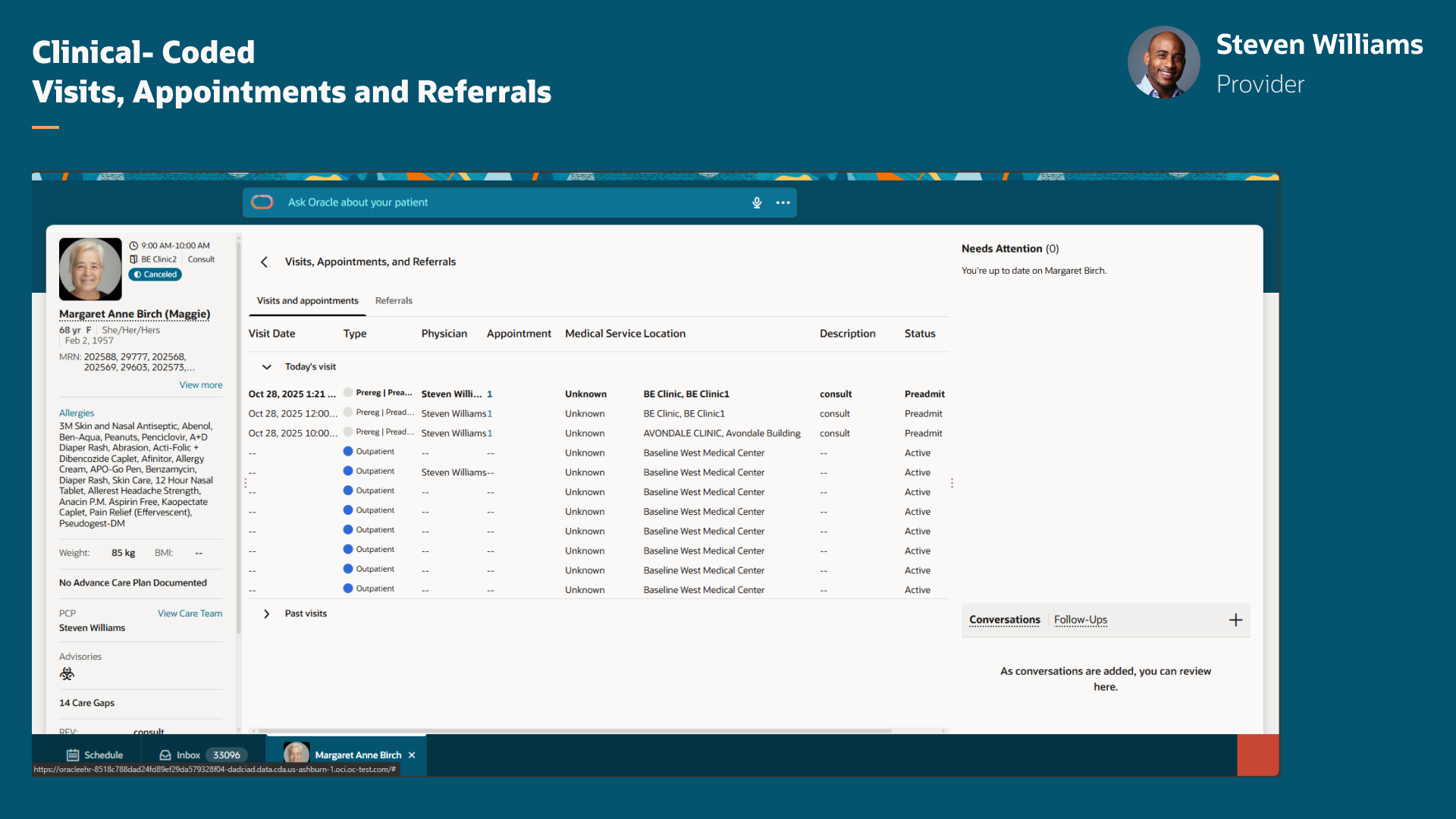
What was coded
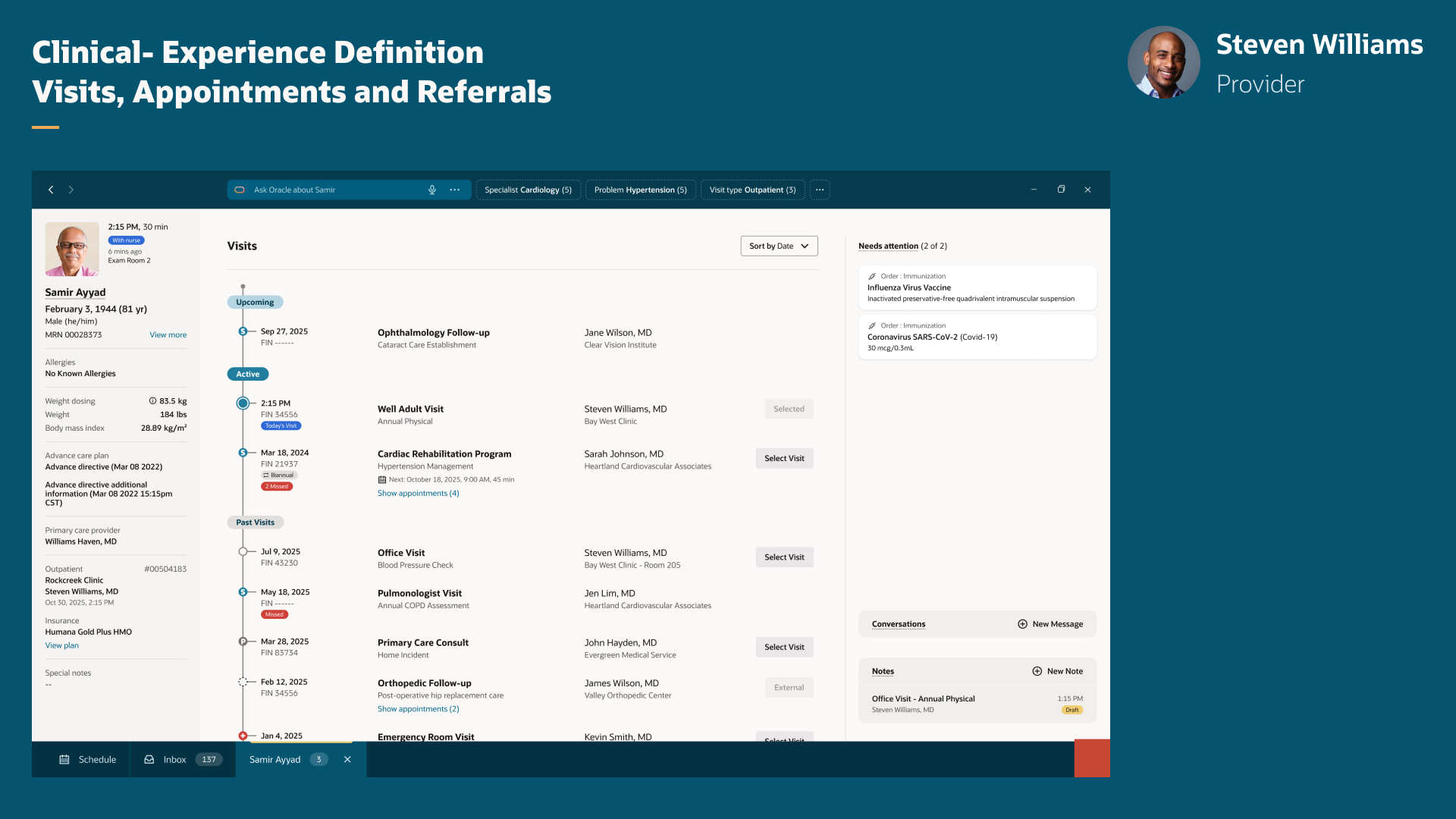
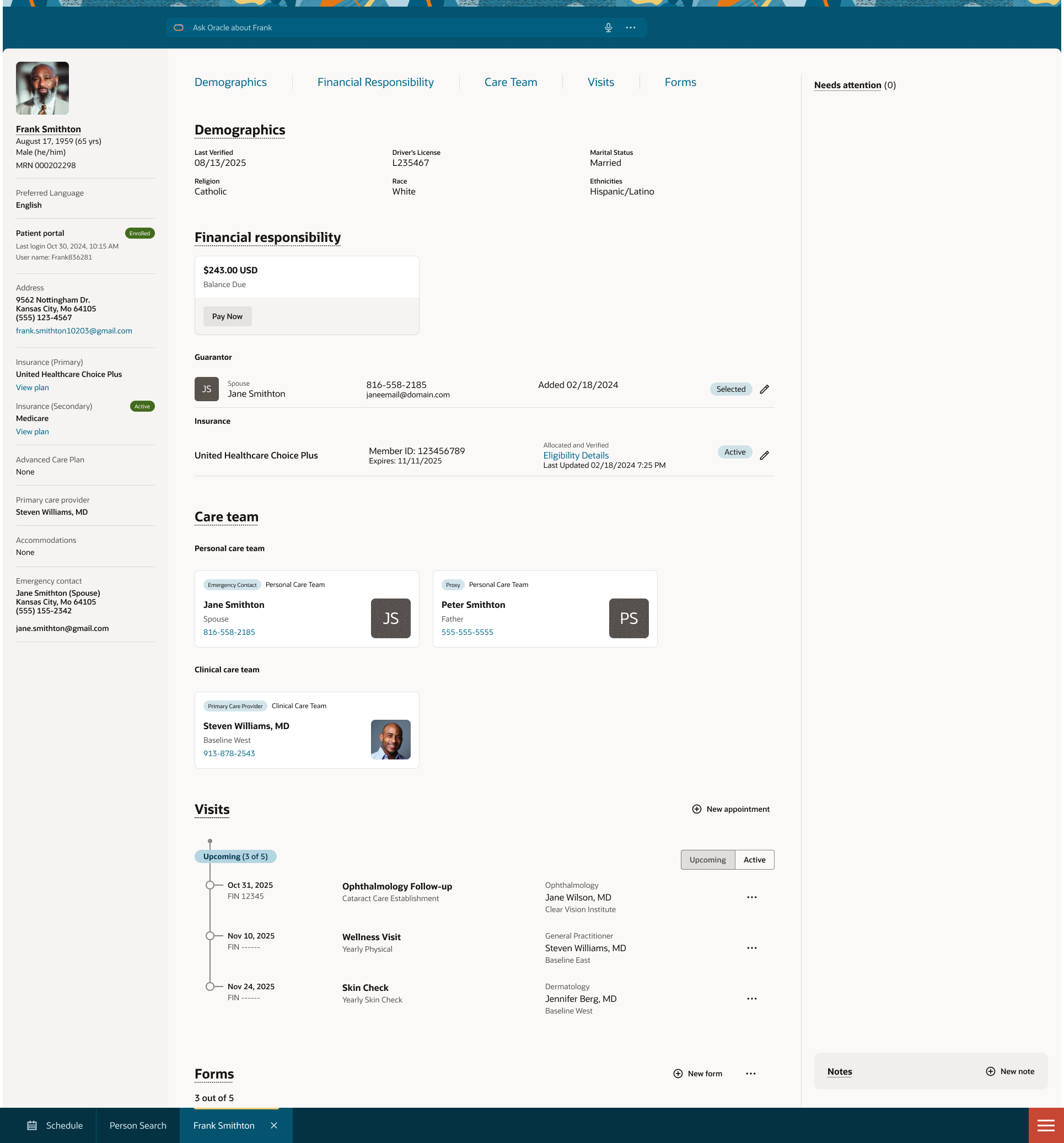
What we designed

Where should AI assist, and where should the user remain in control?
Throughout the EHR (Electronic Health Record), AI can be used to create more agentic workflows by bringing relevant information to the user instead of requiring them to navigate through the system to find it.
Patient Profile is a good example of where that approach needs to be considered carefully. The purpose of Patient Profile is to give administration and clinicians a comprehensive view of the patient’s information in one place. Rather than having AI determine what information the user should see or take action on their behalf, the experience needs to support the user’s overall awareness of the patient.
Instead of thinking “AI should be everywhere”, it is important to think about where agentic behavior actually makes sense based on the user’s goals.