ReferMe
University of Kansas Thesis, 2020
In a culture where technology is widely available, psychotherapeutic services should provide better, easier ways for users to find appropriate in-person psychotherapeutic services. There are many websites and apps available to help people find online therapy, but comparatively few offer in-person therapy. The few platforms that do aid in finding in-person therapy sessions are poorly designed, cold, and unduly complicated. Many of those platforms also serve up far too many irrelevant options after completing both the survey and filtering. This experience can be overwhelming. Options that would be a good fit for the user are often buried deep in a long list, and the user may not be able to discern their best match.
Thesis Objective
To design a service platform that gives users the confidence to find an in-person psychotherapist using their mobile phone, tablet, or computer. The platform should offer a search experience that narrows the pool of options into a discrete, manageable list and guides the user’s journey with easy, step-by-step directions and guidance. Through a process of research, discovery, and analysis, this author will recommend an improved platform design for finding the psychological help they need.

Research Questions
How does a service-finding platform filter and present information in a way that makes the user feel like the list is specifically created for them?
When there are many options, what questions need to be asked in order for the final items to be narrowed and specific to the user?
How many psychotherapists should be presented to the user in order for them to feel like they have a good but not overwhelming selection?
How does a site make the user feel comfortable and build the user’s trust?
Understanding the Problem
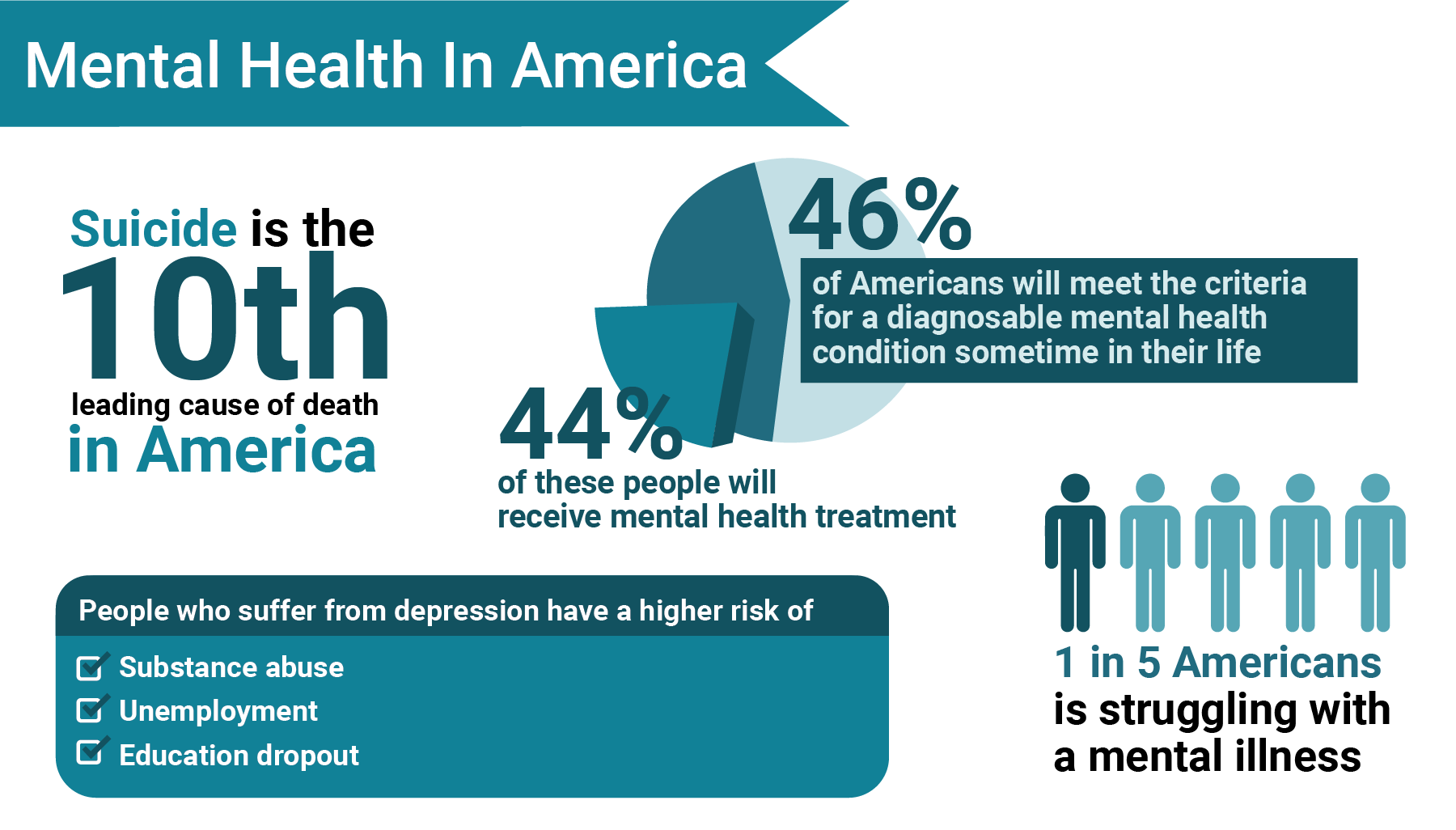
According to National Alliance on Mental illness, suicide has become the 10th leading cause of death in America, with 1 in 5 Americans struggling with a mental illness. Even though suicide is the most extreme outcome, it is not the only negative outcome from mental illness. People who suffer from depression have a higher risk of developing cardiovascular disease, experience substance abuse, are more likely to be unemployed, and have a higher education dropout rate compared to peers. (National Alliance on Mental Illness, 2020)
According to Mental Health America, 46% of Americans will meet the criteria for a diagnosable mental health condition sometime in their life, and half of those people will develop conditions by the age of 14. This statistic implies that almost half of people would need to see a psychotherapist at some time in their life, but only 44% of people with mental illness receive mental health treatment. (National Alliance on Mental Illness, 2020) There are many reasons why Americans are not receiving the help they need. Acknowledging one needs help, the stigma behind mental health, financial constraints, and making time in a busy life for appointments are all obstacles in receiving the help one needs. (Wagner, 1994) There is nothing worse than finally finding a psychotherapist, making an appointment, and then leaving the appointment feeling like it was a waste of time or feeling like nothing was gained from the experience.
Many who finally attend therapy but do not get the sense of fulfillment start to question if seeking help is truly worth their money and time. According to a research study at Brigham Young University, 20 to 57% of people do not return after their first initial therapy session. (Lambert & Barley, 2001) There are many reasons someone might not return to therapy, but a personal connection with the patient and professional is a large factor.
Design Methods
Survey
Interviews
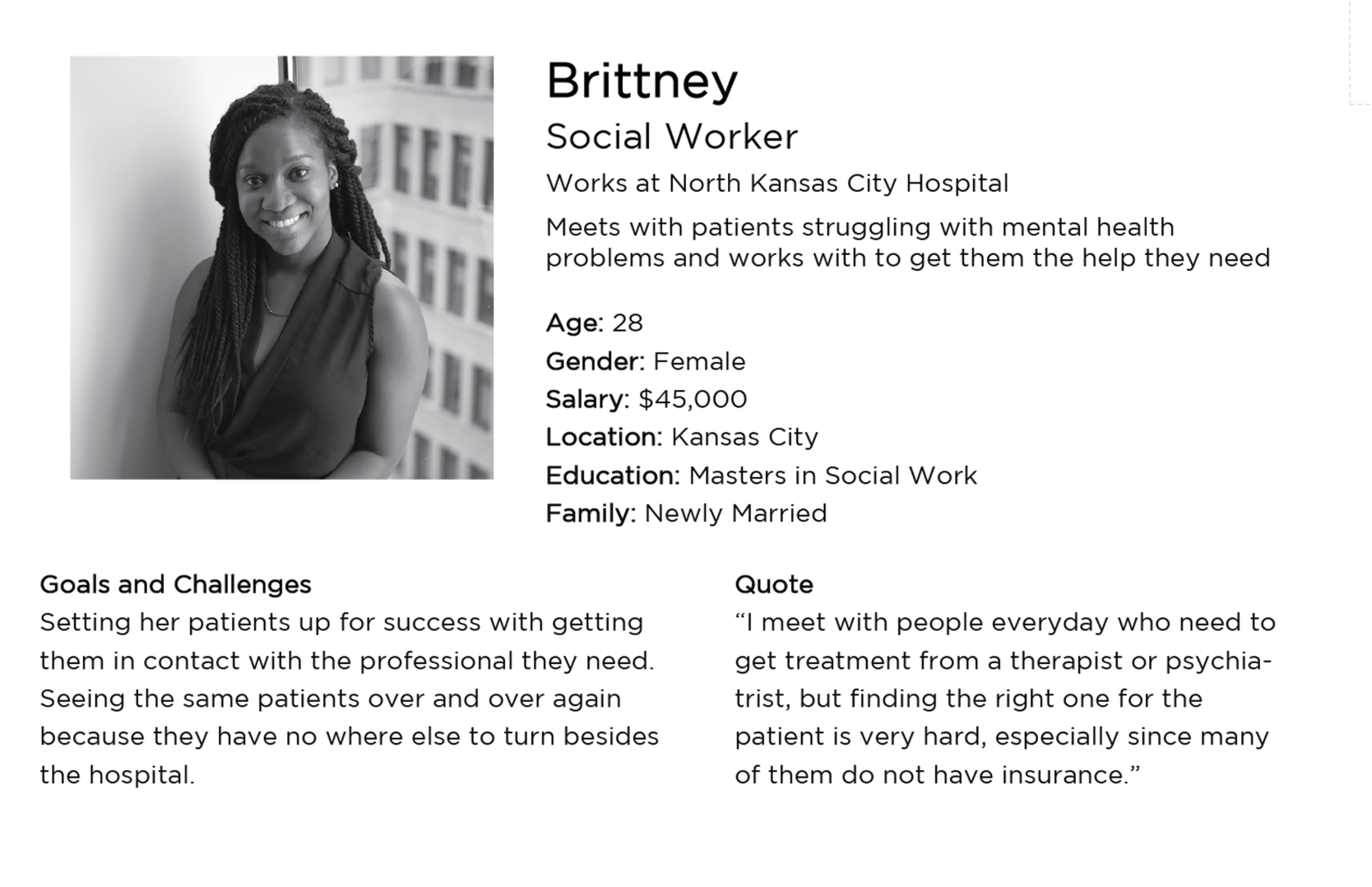
Personas
Card Sorting
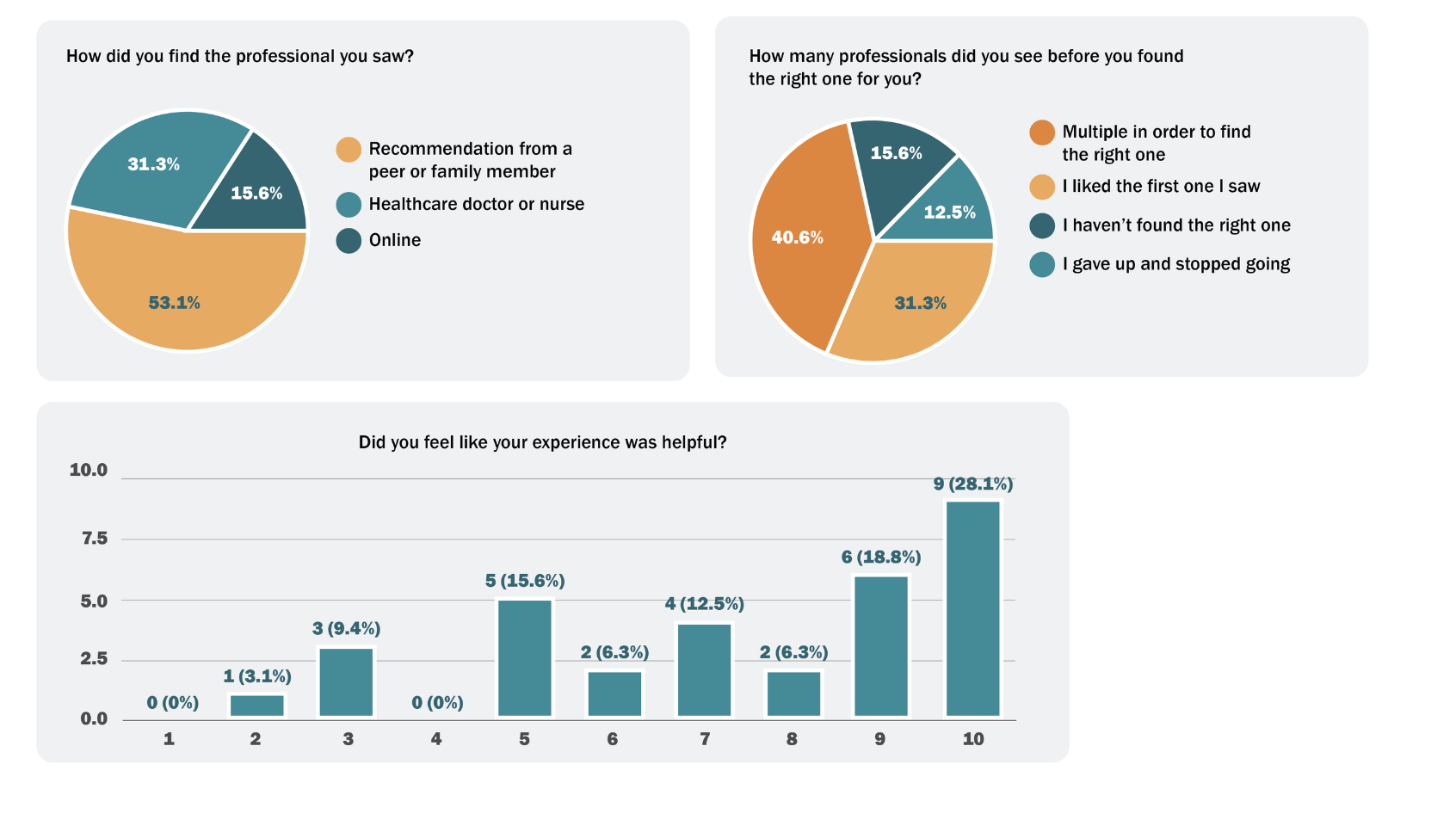
What I learned from the design methods conducted:
Learn how to make the filters meaningful.
Make the filters more personal to narrow down the list.
Make sure changing the filters, results in different options.
Focus more on what the user wants out of their interaction.
Pair users to professionals based on compatibility.
Ask what is the user struggling with and what type of treatment are they looking for?
Ask the user more questions.
By being more specific, the user will get more personalized results.
Follow up with the user
Did they have success with the professional?
Can the new solution help the user if they did not have success?
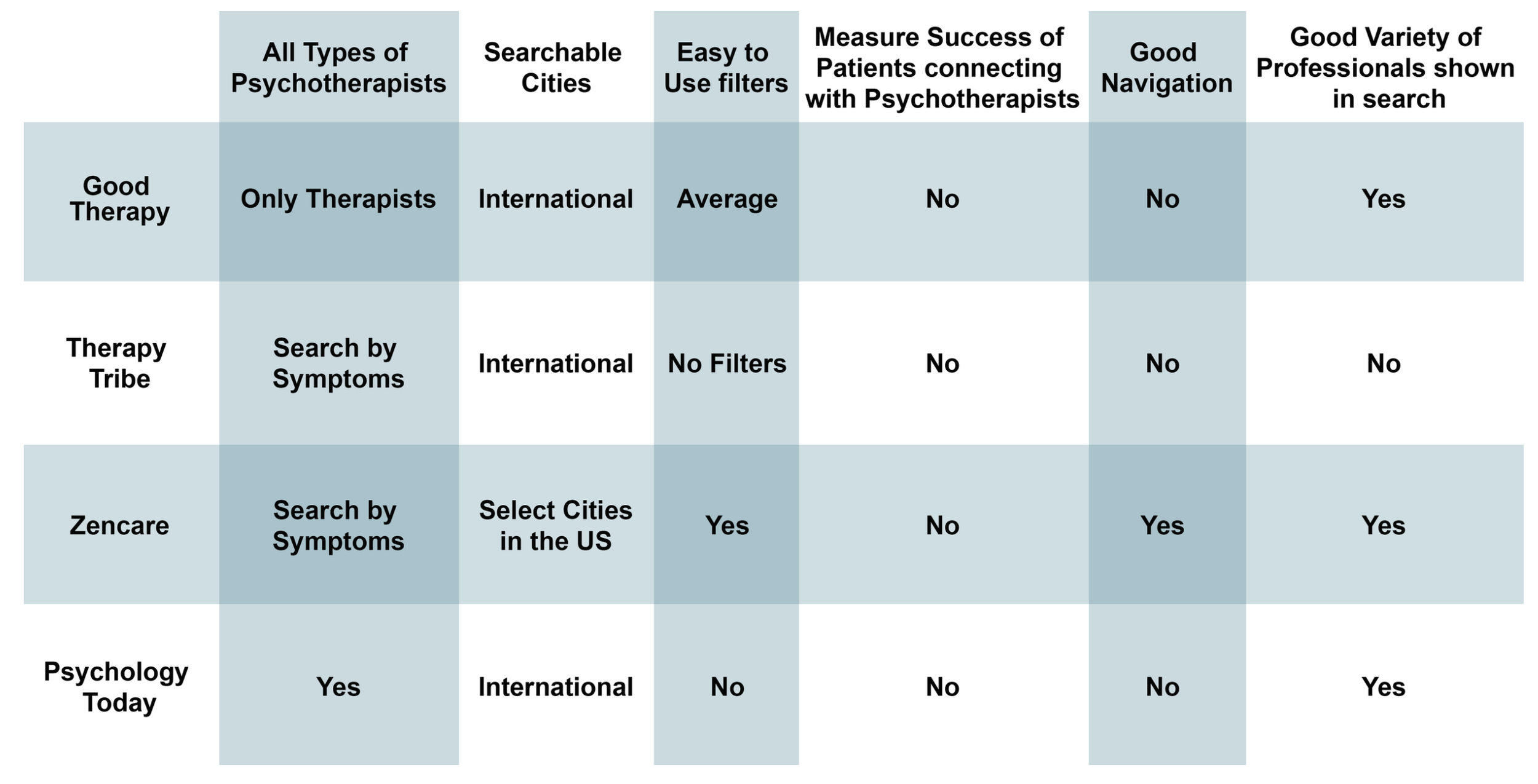
SWAT Analysis
Design Solution
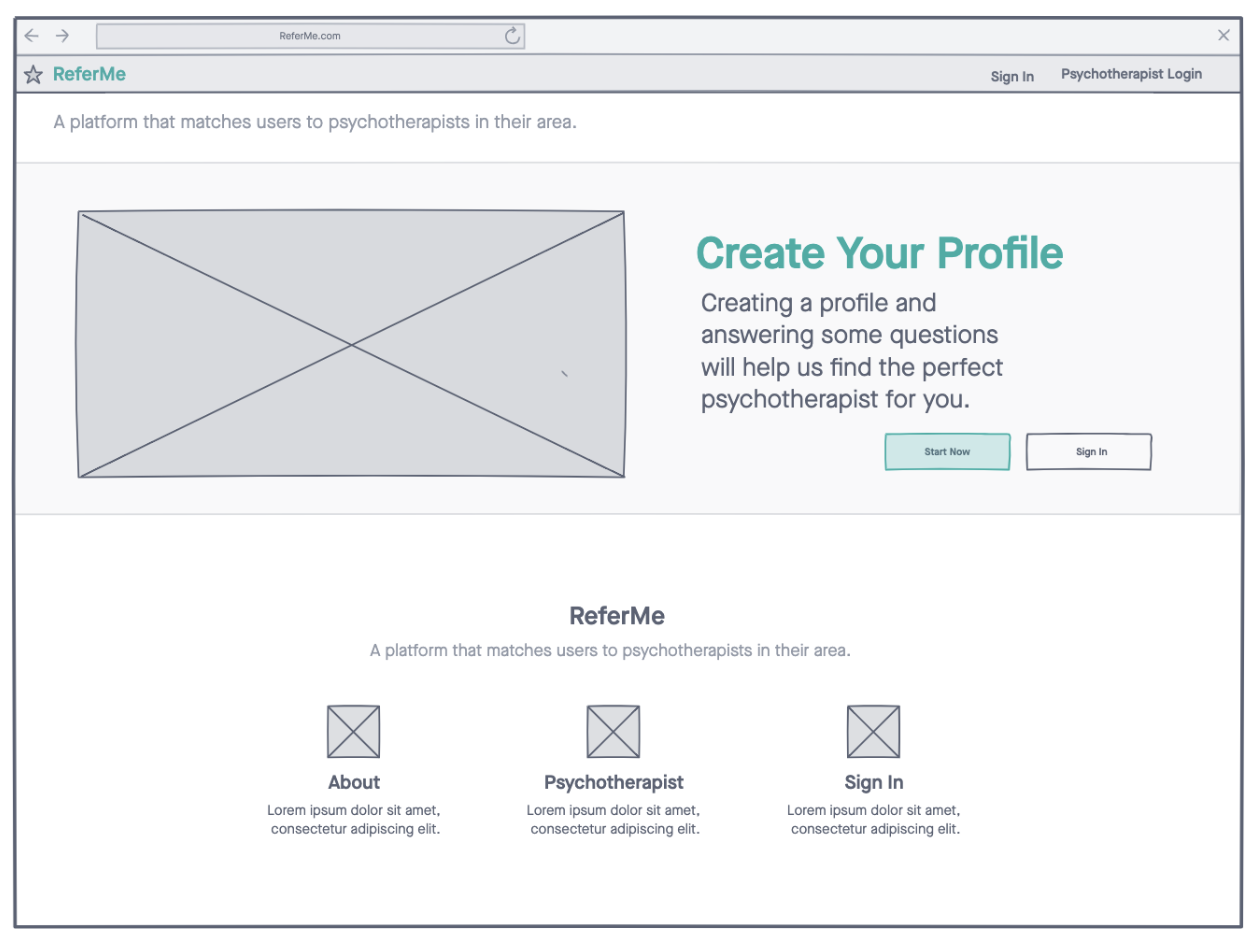
Homepage
The Homepage allows new users to create a profile, existing users, and psychotherapists to log in.
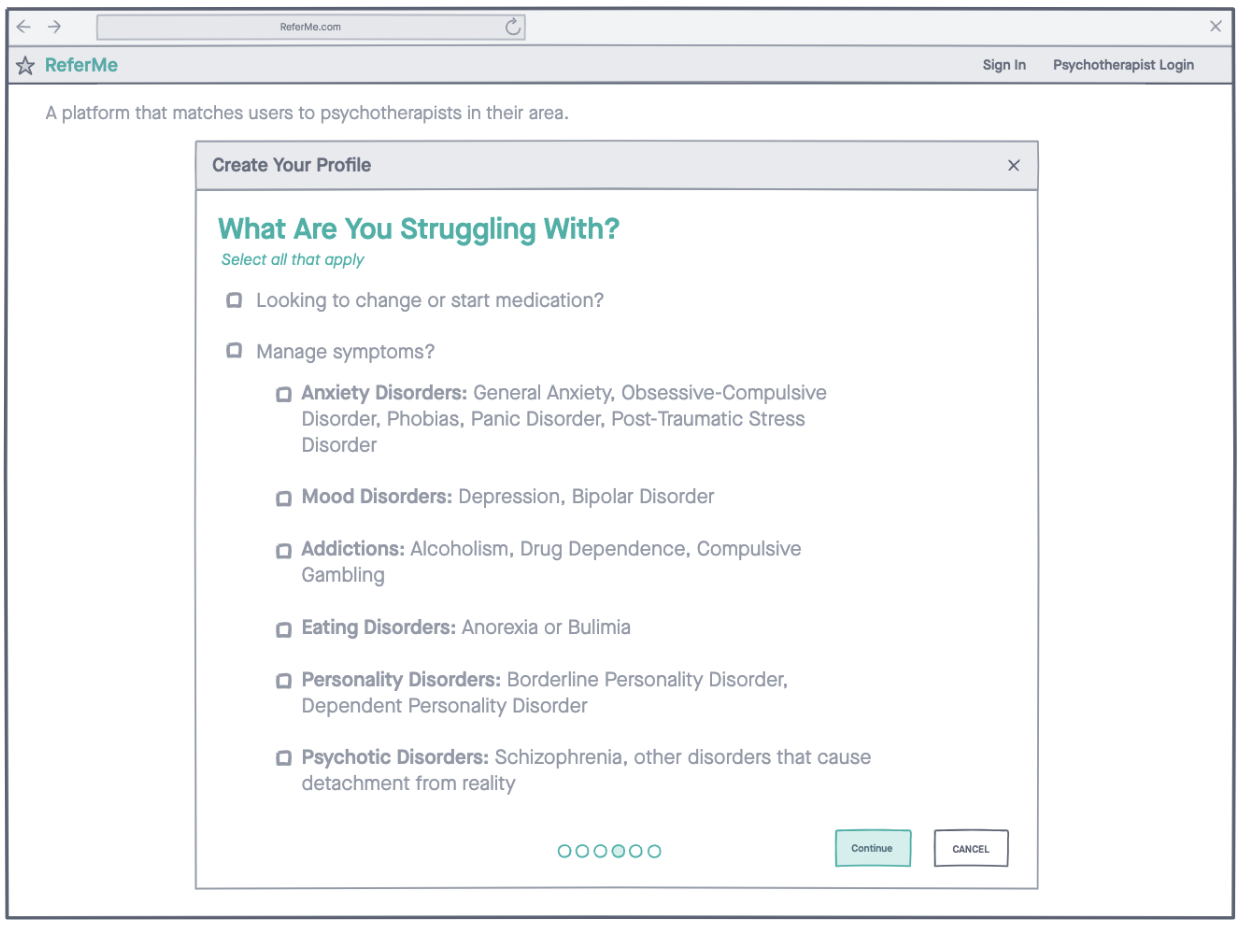
What Are You Struggling With?
Symptom Checklist- This section helps narrow down what and who the user is looking for based on their wants and needs in a broader sense by narrowing down the disorders the user might be struggling with.
If the user selects the checkbox mentioning medication, the search engine knows to show professionals with the capability to proscribe.
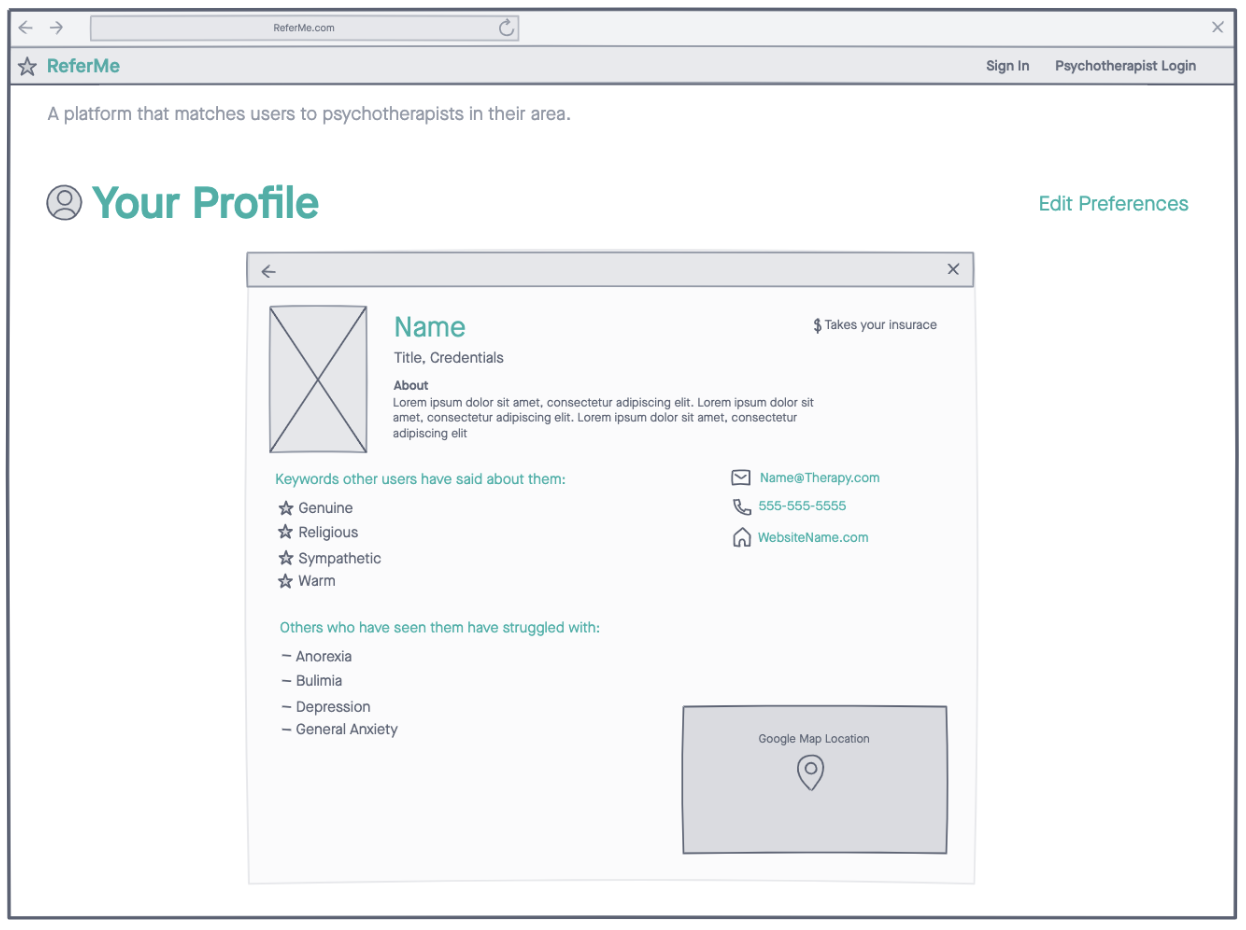
Individual Psychotherapist Option
After selecting a professional from the list given to the user, they will then be taken to a page where the user can learn more about the psychotherapist. It will have their contact information and location, 5 Keywords other uses have stated about them, and a list of symptoms other users have had when seeking treatment from them.
The keywords and list of symptoms are based on other users who have seen this professional for treatment.
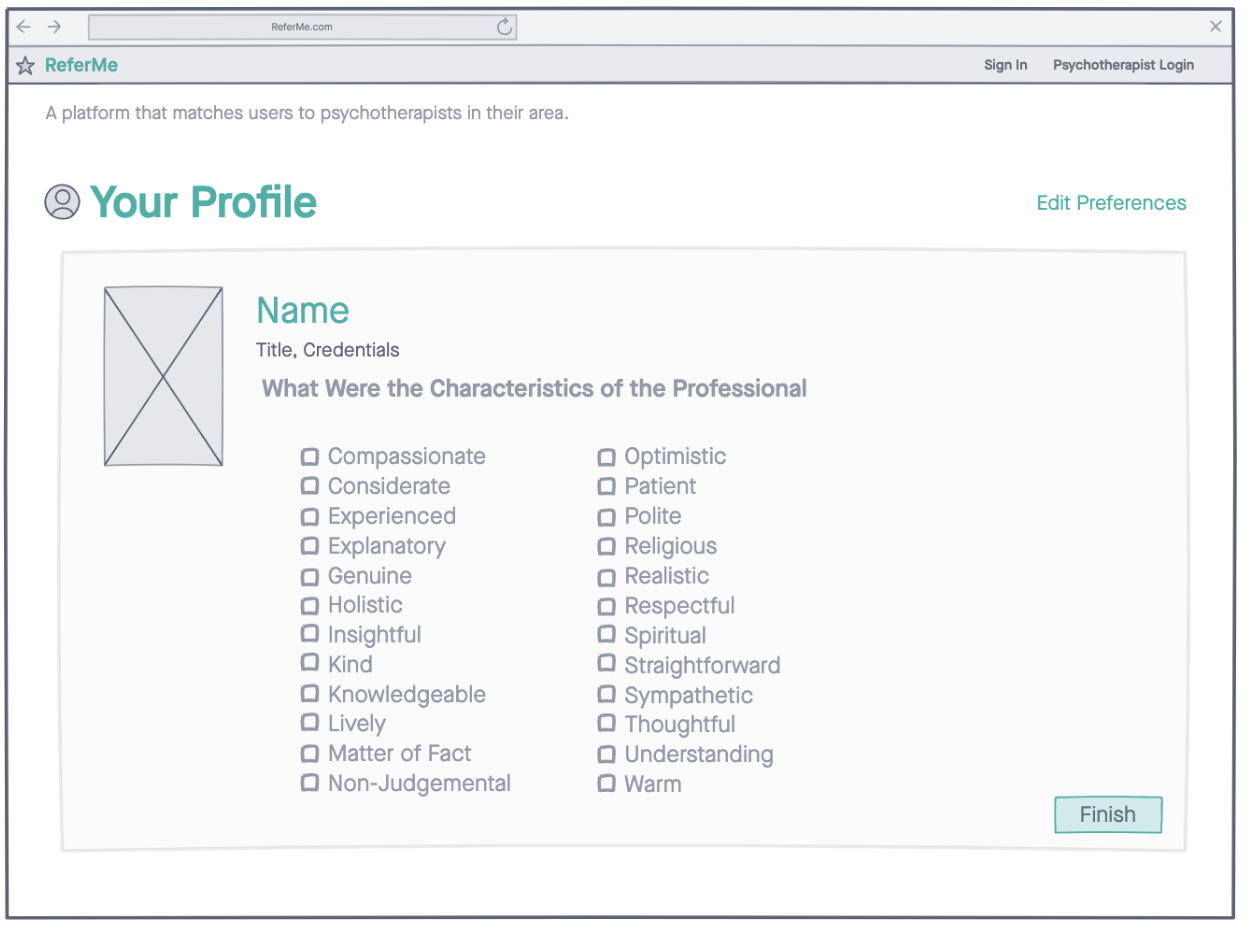
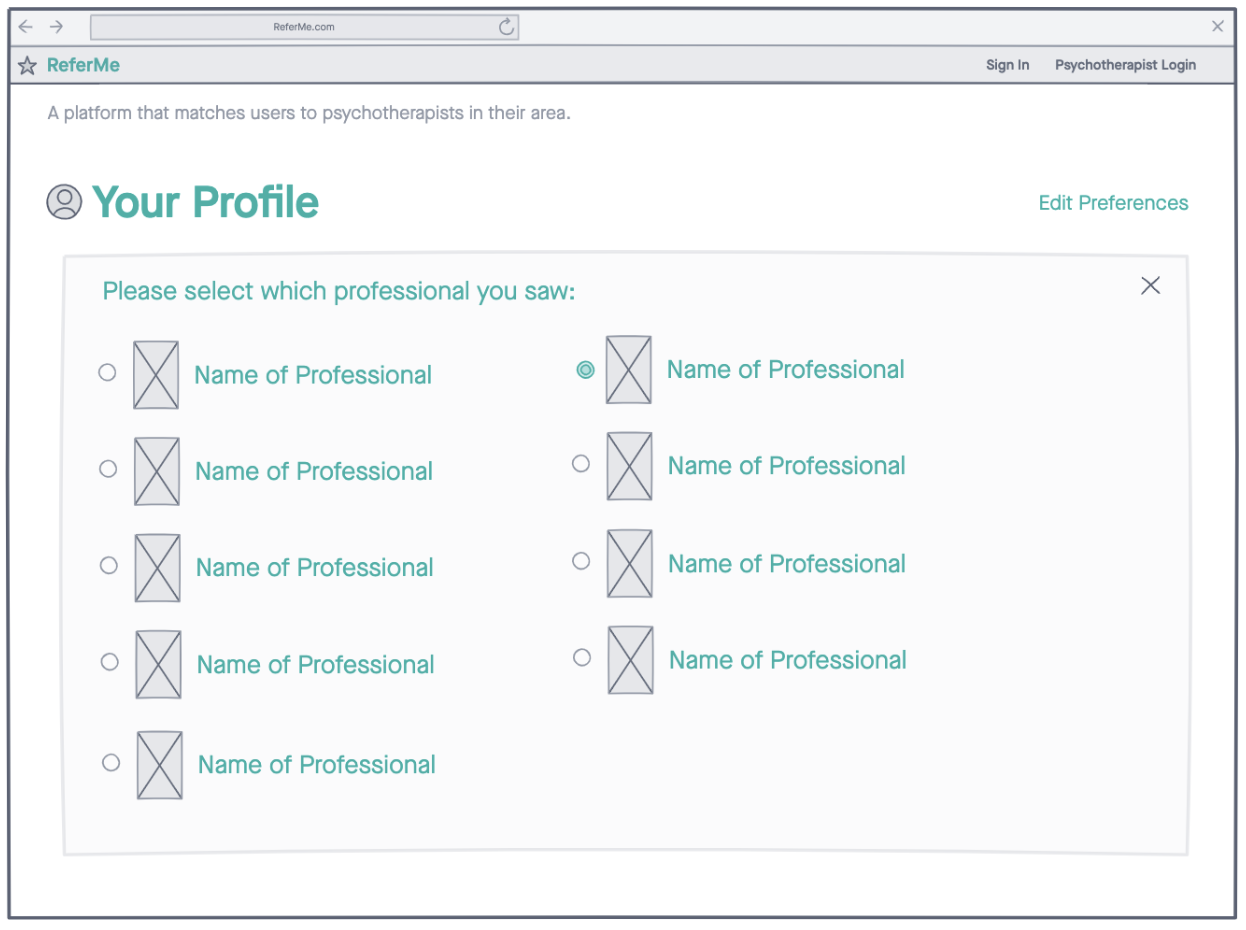
“Yes, I did” Workflow Continued
After selecting the professional the user saw, they will be asked to select the keywords that describe the professional. There would not be a required amount or limit allowing the user to answer freeingly.
These keywords play a role in the algorithm when a user is searching for a psychotherapist.
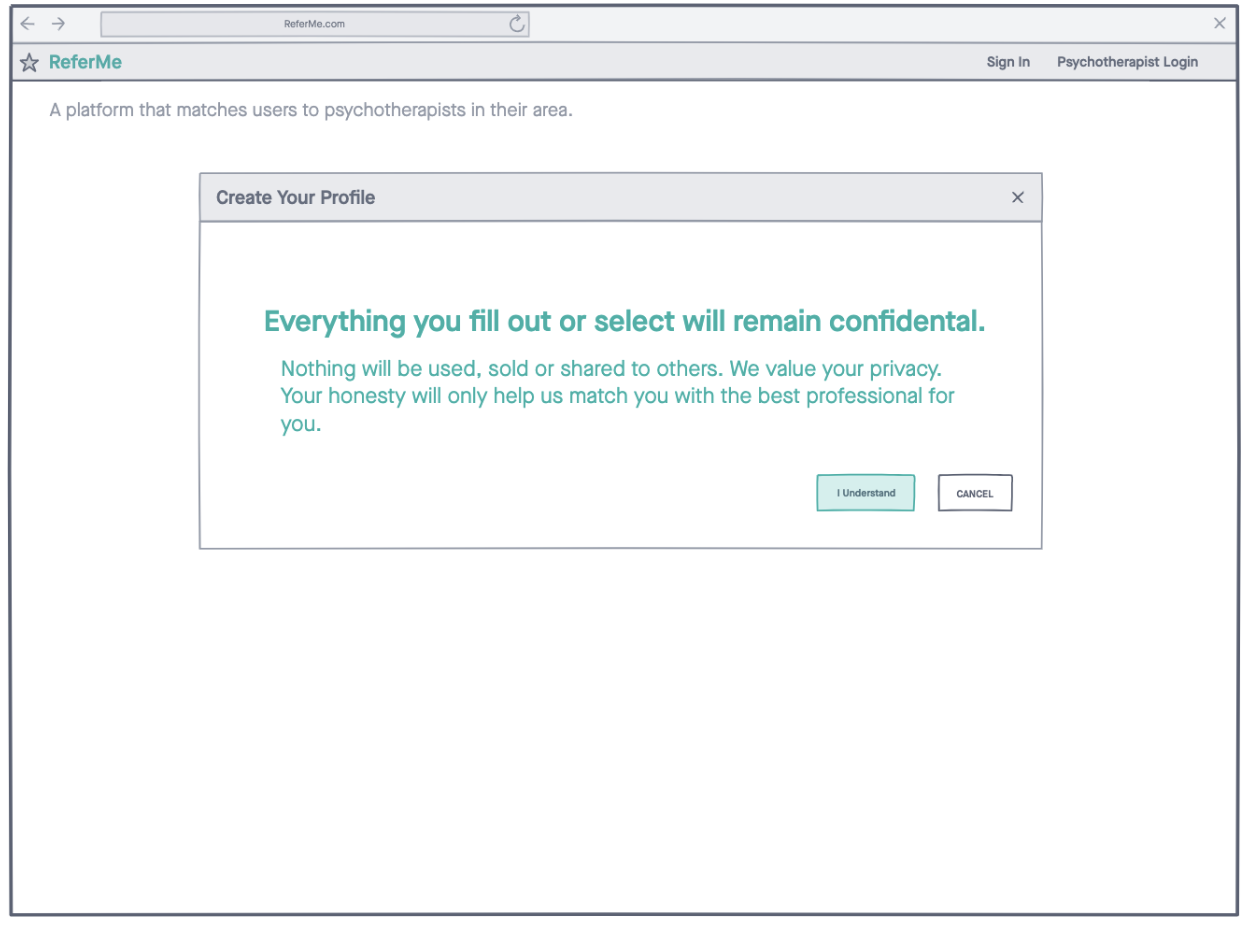
Confidentially Pop-up
Alerting the user that all answers will be confidential.
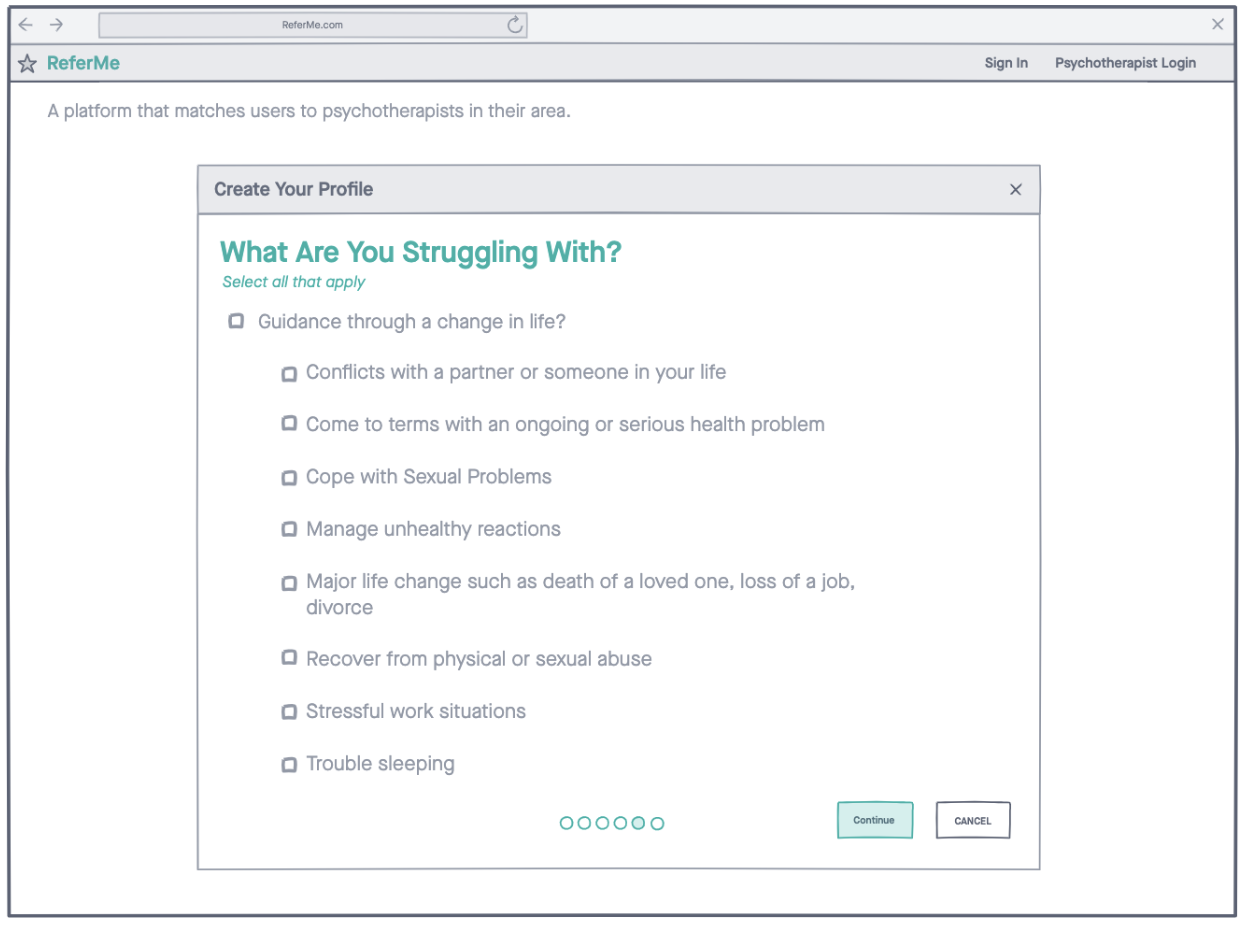
What Are You Struggling With? Continued
This section goes into a deeper dive on symptoms by asking the user if they have specific symptoms or struggles.
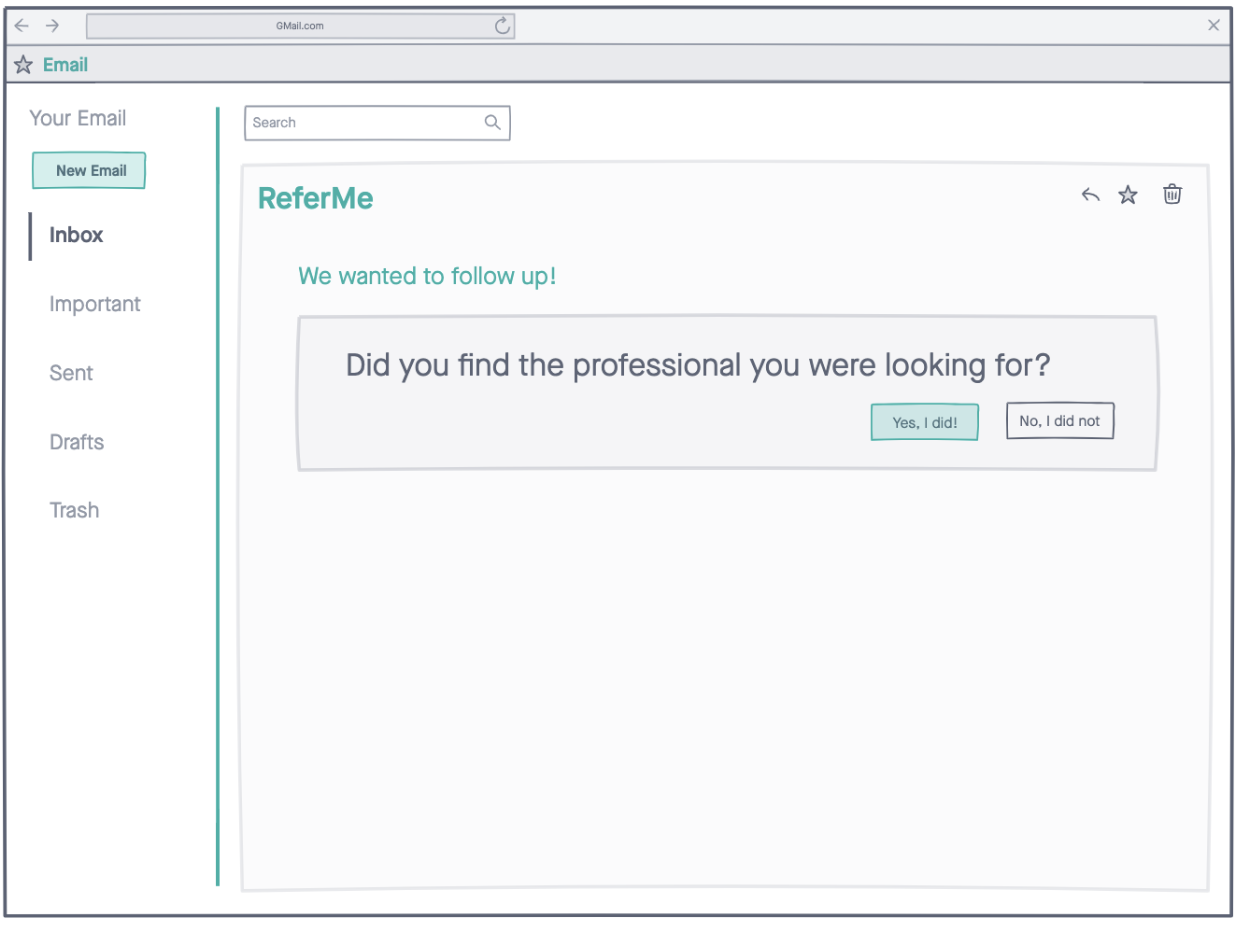
Reaching Back Out
A week after the user creates a profile and completes the survey, the platform would reach back out and re-engage the user.
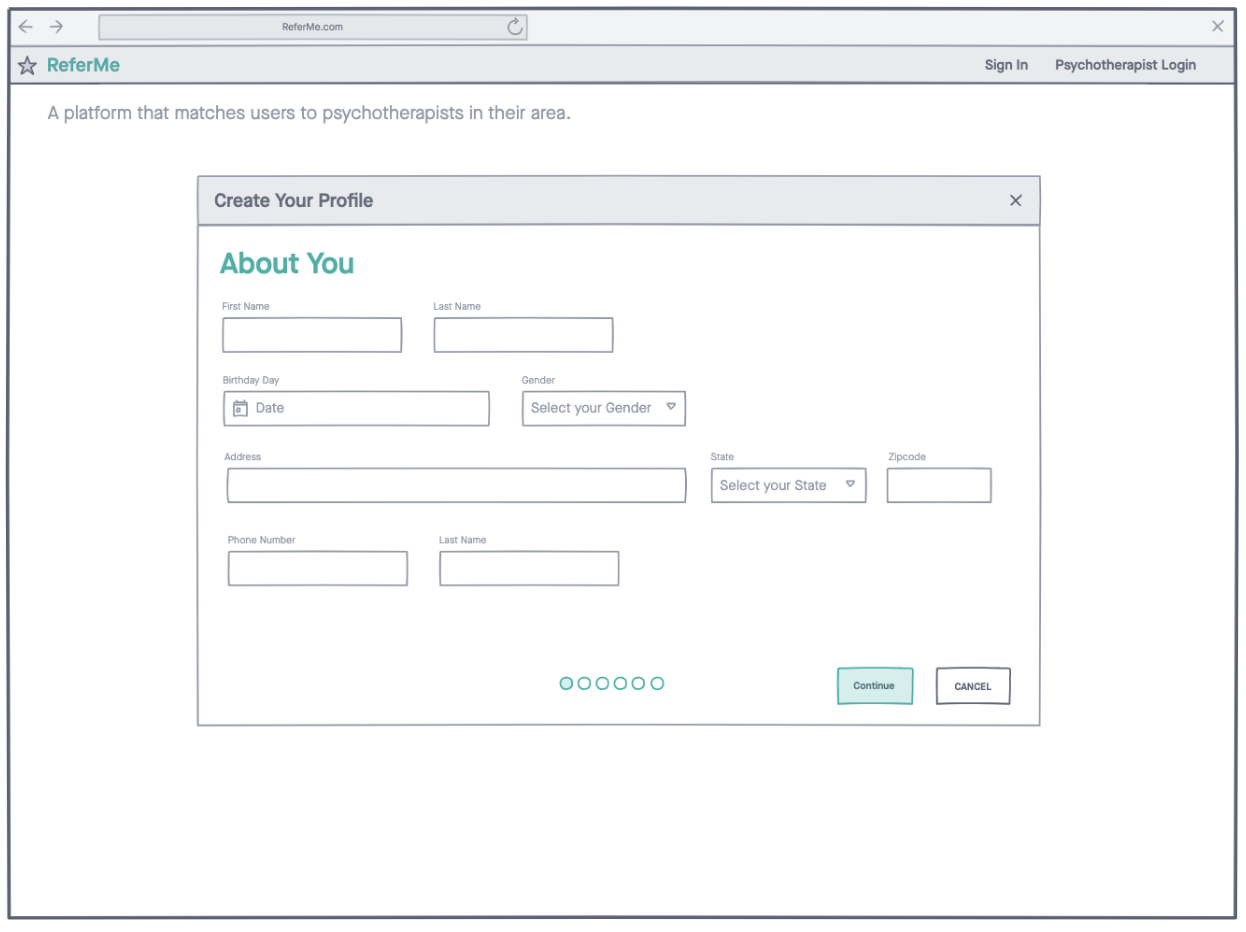
About You
When the user starts creating their profile, they will be taken through a survey. The first section is basic user contact information.
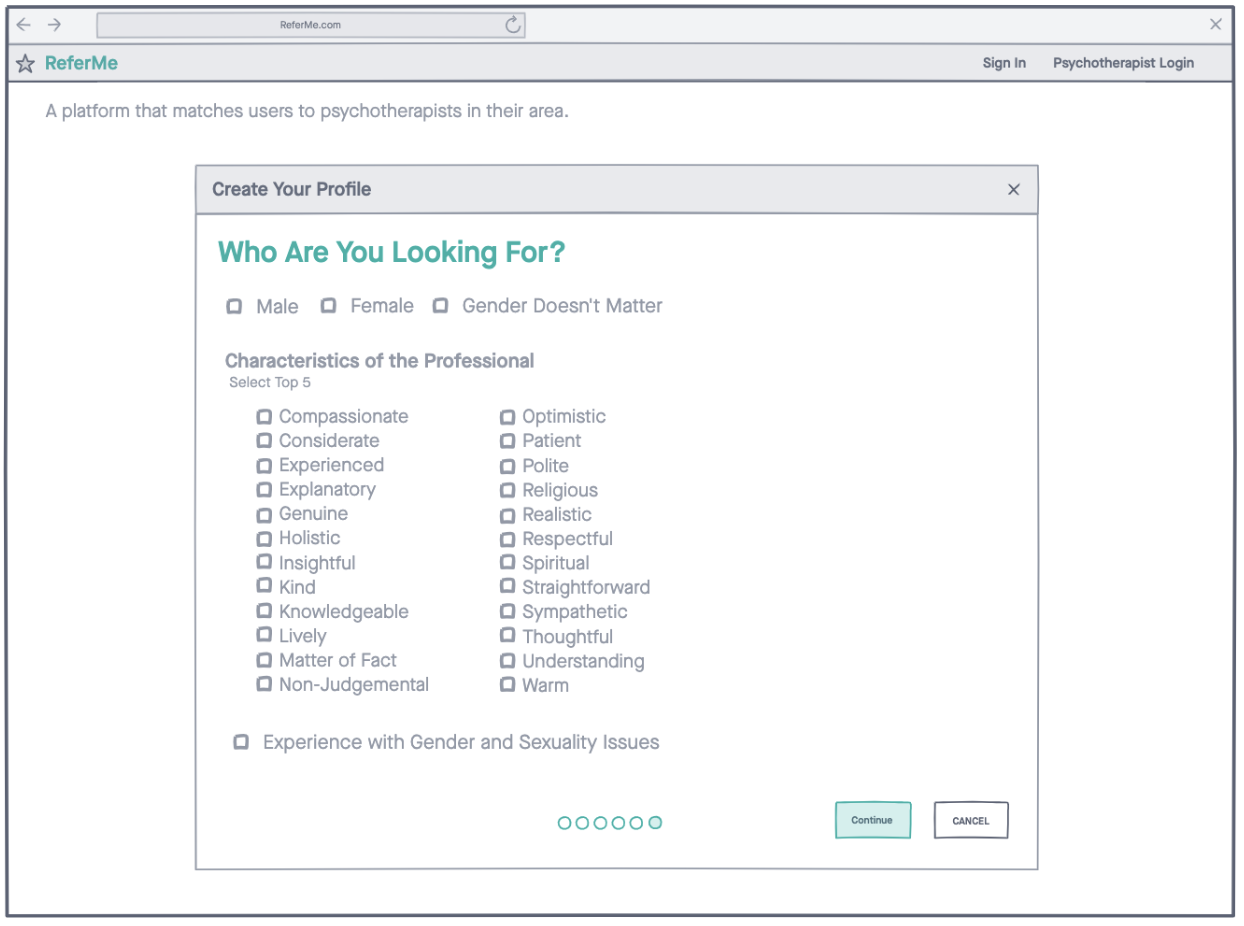
Who Are You Looking For?
This section focuses on the compatibility of the user and the psychotherapist. It allows the user to select characteristics they would want in a mental health professional through selecting keywords.
These Keywords are very important. They are not only used in the onboarding processes but continuously throughout the user’s workflow. The keywords will end up affecting the algorithm and other users.
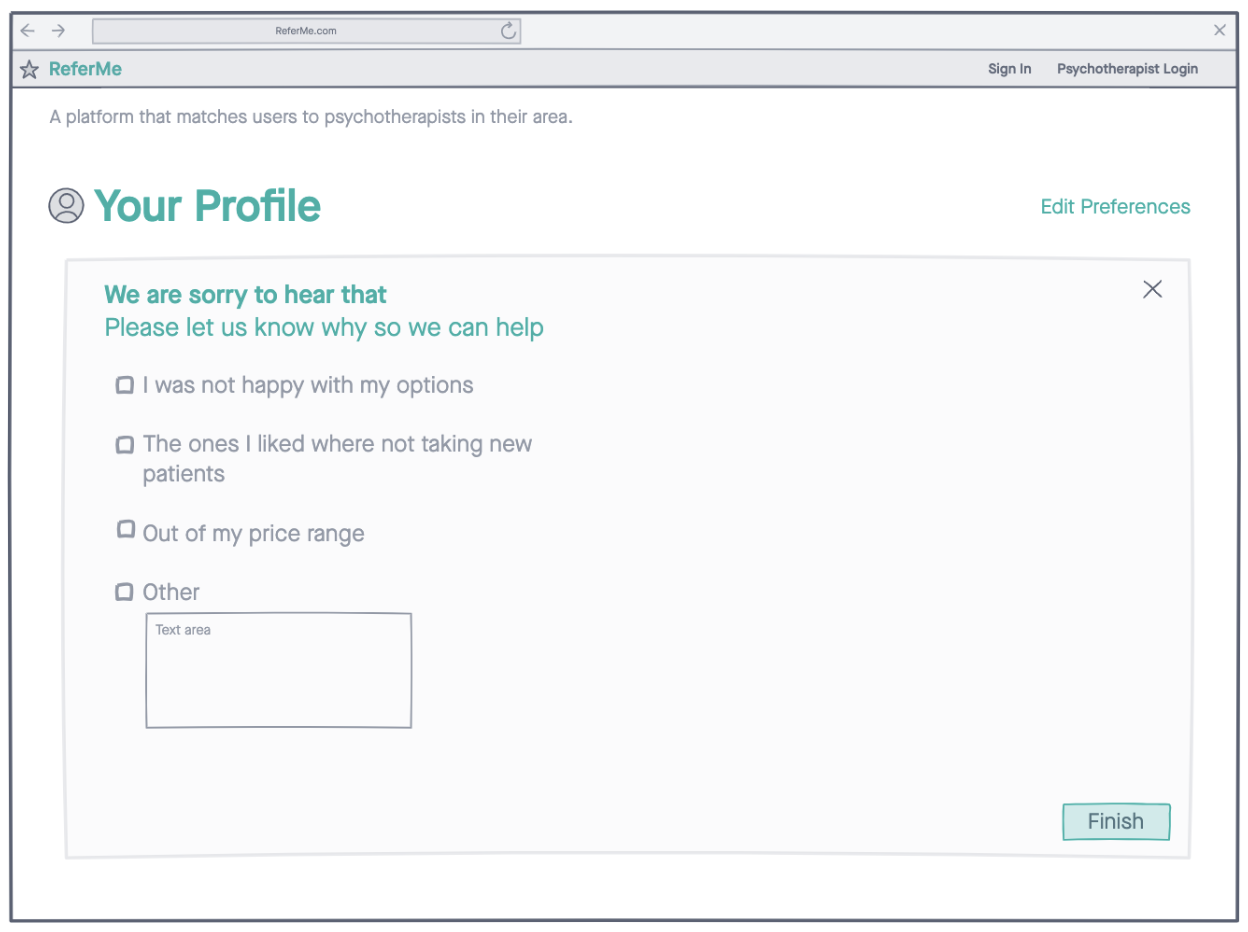
“No, I didn’t” Workflow
If the user did not meet with 1 of the 9 psychotherapists provided to them and they select “No, I did not” on the re-engagement email, they will be asked a few questions. These questions can help alter the list given to the user and help users in the future receive a better list from the platform.
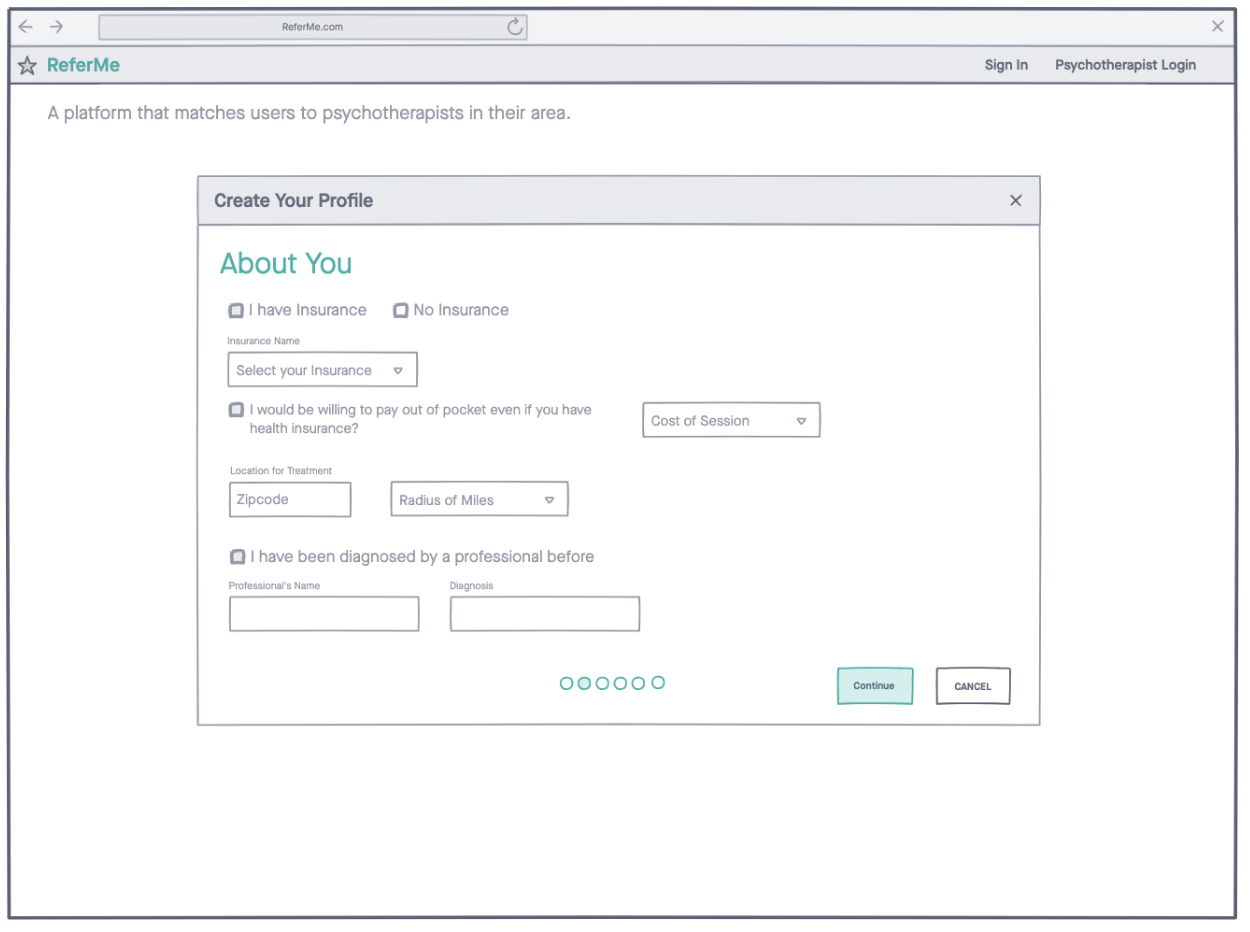
About You Continued
The next part in the About You section dives into more personal information like insurance coverage, out-of-pocket price range, location, and prior diagnosis. It is important to ask the user what their out-of-pocket price range is because a lot of great psychotherapists are not covered by insurance but can still be affordable.
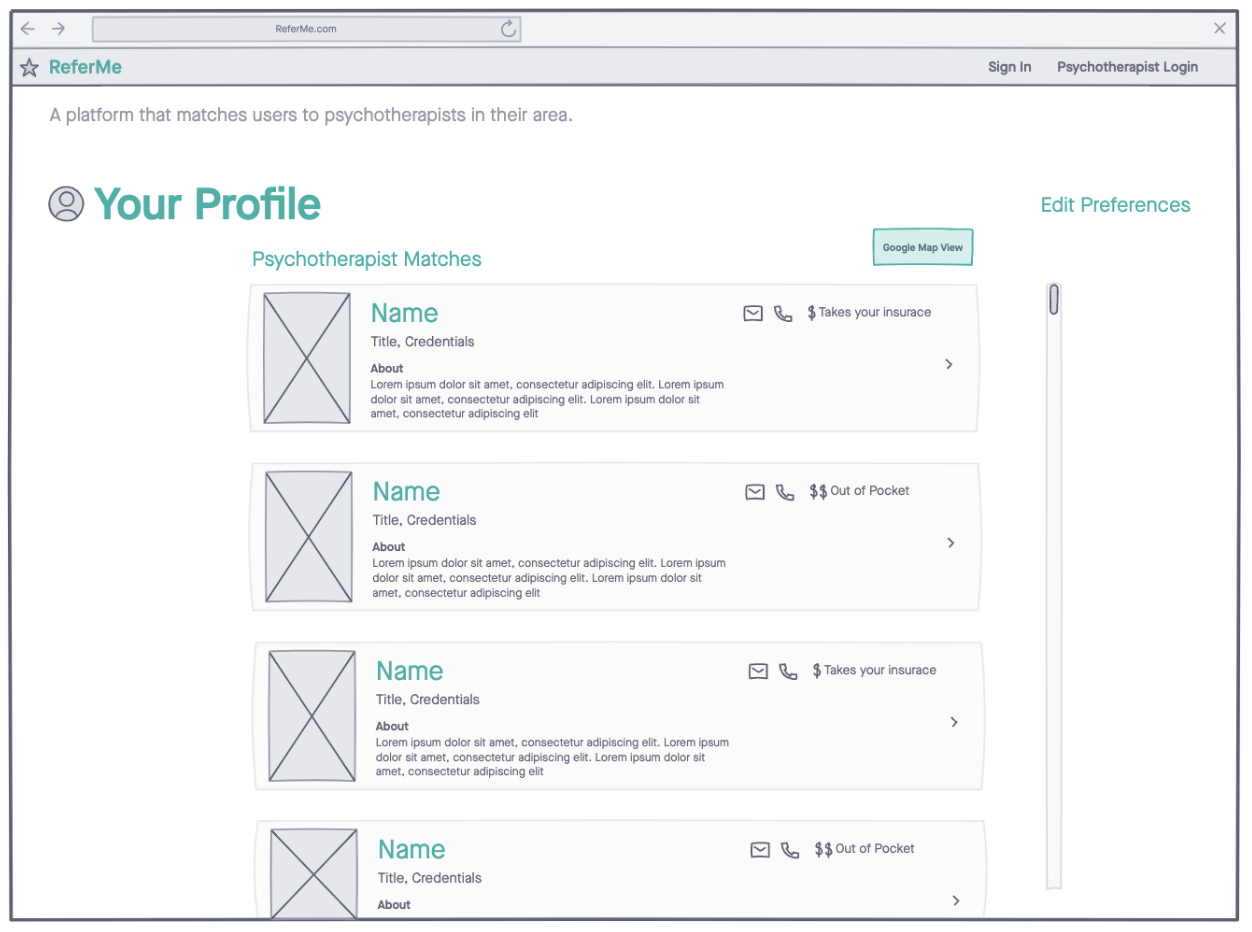
Personalized List
After completing the survey, the user is given 9 options of psychotherapists that are tailor to their wants and needs. The list consists of basic information on each professional’s card.
“Yes, I did” Workflow
If the user selects that they did have success finding a psychotherapist, they will be brought to a page where they can select the psychotherapist they saw out of the 9 options they were given.